
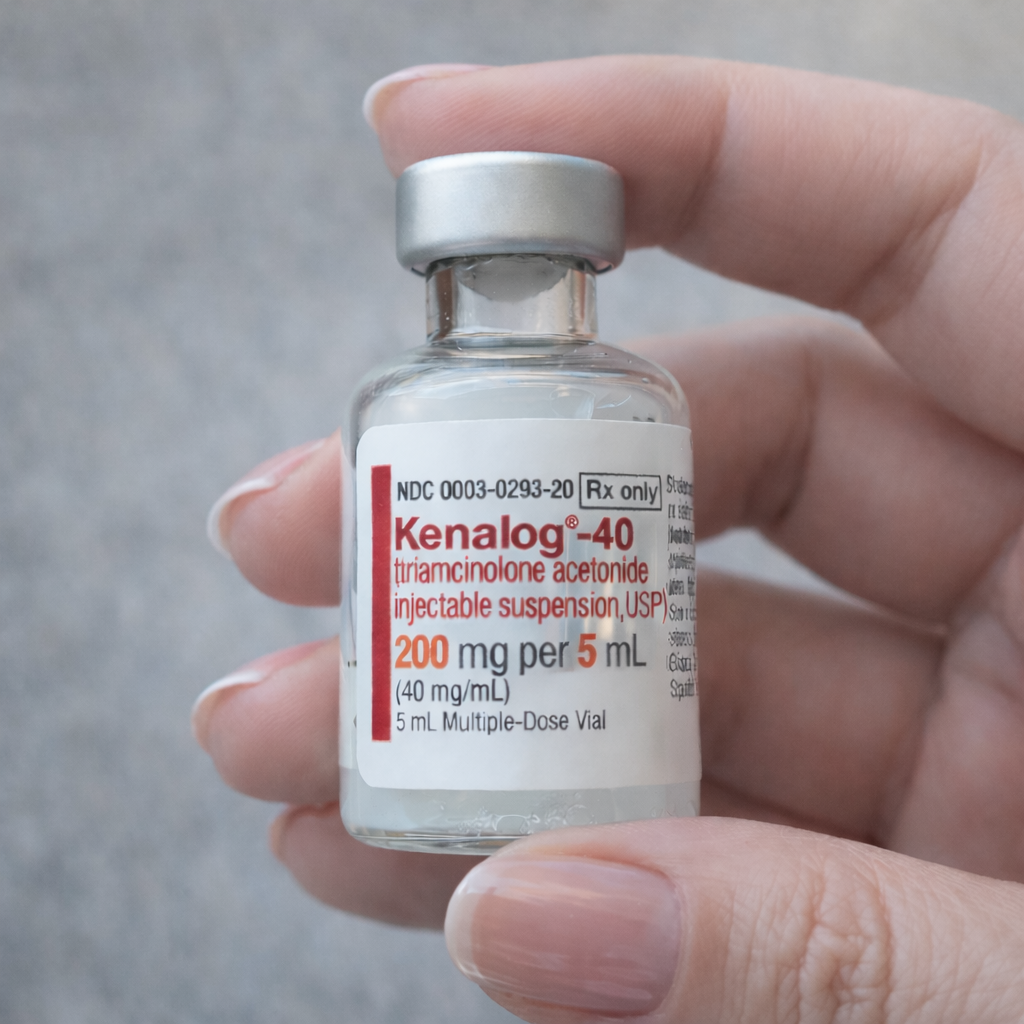
What is the triamcinolone shortage right now?
The current supply picture is best described as continued tightness across triamcinolone acetonide injectable suspension, with meaningful differences by presentation and manufacturer. For most buyers, the operational issue is not whether triamcinolone exists in the market, but whether the NDC and package configuration needed for a procedure area or clinic can be sourced reliably.
- Kenalog-40 1 mL (NDC 00003-0293-05): back order, no estimated release date.
- Kenalog-40 5 mL (NDC 00003-0293-20): back order, no estimated release date.
- Kenalog-40 10 mL (NDC 00003-0293-28): listed as available.
- Amneal 1 mL, 5 mL, and 10 mL: listed as available.
- Hikma 1 mL: back order, estimated mid- to late-August 2026 release.
- Long Grove 5 mL and 10 mL: back order, with a May 2026 estimate shown for the 5 mL presentation.
- Viatris 1 mL: listed as available; Viatris 5 mL and 10 mL: back order with no estimated release date.
- Teva: temporarily discontinued.
- Eugia: discontinued in mid-2025.
For package-level monitoring, buyers can use PRN's Triamcinolone shortage index and the Kenalog-40 product family page to move from a generic shortage check into presentation review.
Is Kenalog discontinued, restricted, or just difficult to source?
The public market signal does not support a blanket statement that Kenalog is discontinued in the United States. A more accurate reading is that supply is uneven by presentation. In practical terms, that means a purchasing desk may experience a preferred Kenalog-40 item as "gone" when a wholesaler path dries up, but that is not the same as a confirmed U.S. market withdrawal across the brand family.
That distinction matters. Current public records still show the Kenalog-40 family in 1 mL, 5 mL, and 10 mL configurations, and the 10 mL presentation remains visible as available while the 1 mL and 5 mL presentations remain on back order. Procurement teams should therefore frame the issue as a presentation-specific sourcing problem rather than a simple discontinued-vs.-available question.
What is causing the Kenalog-40 / injectable triamcinolone shortage?
There is no single public root-cause statement that explains every affected triamcinolone presentation. Instead, the current shortage bulletin shows a mixed set of drivers:
- Long Grove cites increased demand.
- Teva has temporarily discontinued triamcinolone acetonide.
- Eugia discontinued its injectable suspension line in mid-2025.
- BMS, Hikma, Viatris, and Amneal do not list a public reason in the current bulletin.
From a purchasing standpoint, this behaves like a classic sterile-injectable fragility pattern. When one or more suppliers exit, pause, or constrain a presentation, demand shifts quickly to the remaining lines. That typically shows up first as 1 mL and 5 mL fill-rate volatility, then as broader package-level substitutions and resupply uncertainty. That broader pattern is consistent with the GAO's April 2025 drug shortages report, which described persistent shortages as a supply-chain vulnerability problem that continues to weigh on hospital-critical drug categories.
Which products and dosage forms are affected?
Pharmacy and procurement teams should separate the current picture into three practical buckets:
1) Kenalog-40 family. This includes the 1 mL, 5 mL, and 10 mL branded 40 mg/mL injectable suspension presentations that many buyers associate with routine orthopedic, rheumatology, pain, sports medicine, dermatology, and ambulatory procedure workflows.
2) Generic 40 mg/mL injectable suspension lines. These are where buyers are seeing the widest mix of available, back-ordered, and discontinued status across Amneal, Hikma, Long Grove, Viatris, Teva, and Eugia. The shortage is therefore not uniform across "triamcinolone" as a label; it is highly presentation-specific.
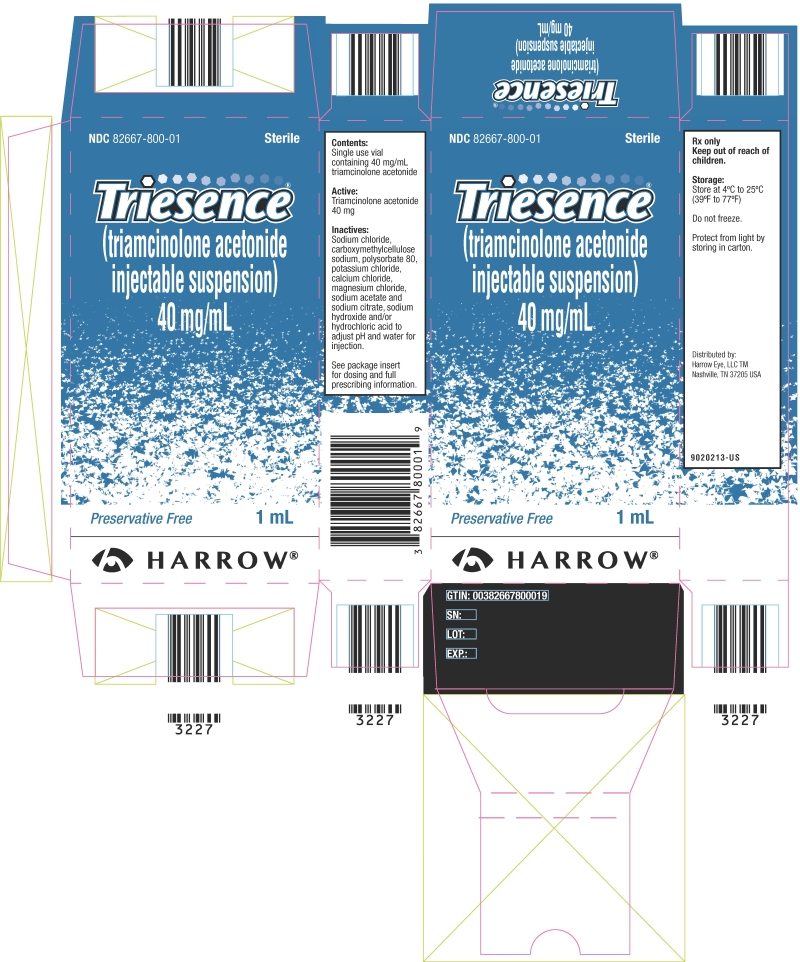
3) Triesence / intravitreal triamcinolone context. Buyers should not treat ophthalmic Triesence as a direct proxy for routine Kenalog-40 sourcing. It sits in a distinct clinical and supply context. Public shortage history around Triesence has been tied to manufacturing delays related to good manufacturing practices and sole-supplier structure, but its intravitreal bulletin should be read separately from the broader Kenalog-40 and generic suspension market.
Route and concentration also matter. Triamcinolone injectable products are visible in multiple concentrations, so any substitution review should confirm concentration, route, labeling, and intended use before a product crosses from one approved pathway to another.
How is this affecting healthcare procurement teams?
For hospitals, ASCs, clinics, and pharmacy buyers, the biggest burden is NDC-level planning. Teams may still have access to triamcinolone in the market while missing the exact 1 mL or 5 mL item they normally buy. That forces more frequent manufacturer crosswalks, more conversations around acceptable package alternatives, and more caution around procedure-area assumptions about what can be replenished quickly.
It also increases administrative workload. Buyers are spending more time validating exact package sizes, reviewing alternate manufacturers, and checking whether a shortage is a true market issue or a channel-specific gap. In this kind of environment, "triamcinolone available" is too broad to be operationally useful without the NDC and package context attached.
What should facilities do when supply is tight?
- Manage the category at the NDC and vial-size level. Use PRN's Kenalog-40 product family page and shortage family views to compare the exact package your team needs before escalating an item as broadly unavailable.
- Keep multiple acceptable sourcing pathways in view. Helpful package-level references include the Kenalog-40 1 mL page, Kenalog-40 5 mL page, Kenalog-40 10 mL page, Amneal 5 mL triamcinolone page, Amneal 10 mL triamcinolone page, and Hikma 1 mL triamcinolone page.
- Separate route and concentration before any substitution decision. Triamcinolone products are not interchangeable on name alone.
- Use pharmacy and governance controls. Any therapeutic interchange, protocol adjustment, or stocking change should flow through facility policy rather than ad hoc purchasing workarounds.
- Avoid panic buying. In a constrained injectable market, aggressive spot accumulation can worsen allocation pressure and make local fill rates less predictable.
Where can pharmacy and procurement teams monitor triamcinolone availability and shortage context on PRN?
Start with PRN's Triamcinolone shortage index, which groups current shortage context across visible triamcinolone presentations and manufacturers. From there, buyers can move into the Kenalog-40 product family page to compare nearby package configurations in the same family, then drill into product detail pages for the presentation under review.
For broader procurement planning, PRN's drug shortage index and high-demand products pages can help teams track adjacent pressure points across injectable categories. If your team needs sourcing support for a specific NDC or alternate package size, use Request a Custom Quote. New licensed facilities can start account setup through customer onboarding.
Need help sourcing triamcinolone by NDC or package size? Use Request a Custom Quote for shortage-related sourcing support, or start customer onboarding if your facility needs a purchasing account.
Informational note: This article is intended for general informational and procurement reference only. It is not medical, legal, or regulatory advice, and facilities should confirm current shortage status, labeling, route, concentration, interchangeability, and purchasing decisions through current manufacturer, distributor, FDA, ASHP, pharmacy, and institutional review channels before acting.